Nationwide referral service, open 24 hours
Biohazard Cleanup, Handled With Care and Discretion
Biohazard cleanup is the safe removal and disinfection of blood, bodily fluids and other biological hazards after a death, accident or crime. If you are facing that situation now, you do not have to handle it yourself. Biohazard Cleanup US connects you with trained, verified local cleanup crews anywhere in the country, day or night, and one call starts the process.

In the first hours
The first hours are the hardest, and they come with decisions. Four things matter most:
Blood and bodily fluids can carry infection long after a surface looks dry, and cleaning first can also complicate an insurance claim. Leave the rooms exactly as they are. The full picture is in our guide: can you clean up a biohazard yourself?
After an unattended death or a crime, police or the coroner must finish their work and release the scene before any crew can enter. We time everything around that release.
Close the doors to the affected rooms and keep children, visitors and pets out of them until the crew has been. The rest of the home is usually fine to use.
Tell us what happened and where, in your own words. We match a verified local crew to the property, and the crew lead explains the next steps before anything is booked.
What happens next
If you have never had to arrange this before, here is the whole path, start to finish. There are no surprises in it.
- 1
You call, and a person answers
Tell us what happened and where, in your own words. You will not be asked for technical terms, and there is no obligation attached to the call.
- 2
A verified local crew is matched to you
We connect you with a trained crew near the property. The crew lead explains what the job involves and arranges a time that works for you, the same day in most areas.
- 3
You approve a written quote first
The crew assesses the scene and puts the full price in writing before any work starts. The final price is confirmed by the contractor after seeing the job, in a written quote before work starts.
- 4
The space is cleaned, disinfected and handed back
The crew removes biohazards, disinfects, treats odor and disposes of waste through licensed transport. When they leave, the space is safe to enter and use again.
What Professional Biohazard Cleanup Includes
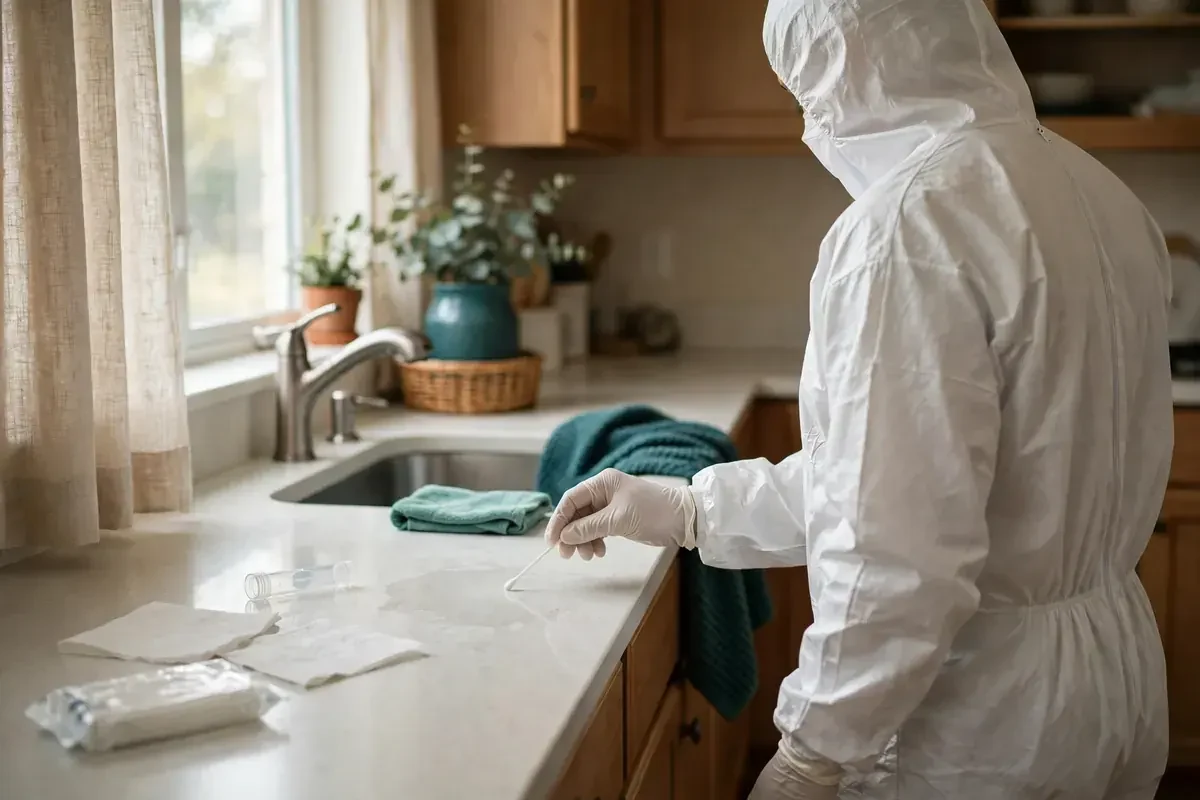
Professional biohazard cleaning is more than cleaning what you can see. Whether you call it biohazard cleaning, a biohazard clean up, or simply cleaning up biohazard material after a death or a crime, the standard is the same written process. Blood and bodily fluids soak into flooring, subfloor, furniture and walls, and they can carry bacteria and viruses long after the surface looks clean.
Assessment and containment
The crew walks the scene, works out the full affected area, including inside materials, and seals the work zone so nothing spreads to clean rooms.
Removal of affected material
Mattresses, carpet, padding, furniture and flooring sections that fluids have soaked are removed, never wiped over and left in place.
Washing and disinfection
Every remaining surface is washed, then disinfected with products rated for bloodborne pathogens, at the dilution and contact time the product requires.
Testing that proves it worked
Surfaces are tested to confirm the disinfection worked. Any area that fails is cleaned and tested again before the room is handed back.
Sealed waste, licensed transport
Everything removed leaves sealed, as regulated waste, with a licensed transporter, and you receive the paperwork for your insurer or your records.
Crews checked before they are sent
Training, insurance and waste arrangements are verified before a crew joins the network, and in California, Georgia, Florida and Illinois the contractor is checked against the state registration as well. The full checklist is on our choosing a cleanup company page.
The situations we help with
Most calls fall into a handful of situations. Each one has its own page, its own process and its own cost picture.
Crime Scene Cleanup
After the police release the scene, trained crews clean and disinfect the space so it can be used again.
02Unattended Death Cleanup
When a death is found days or weeks later, crews remove biohazards, disinfect and clear odors with care.
03Suicide Cleanup
Quiet, discreet cleanup after a suicide, handled by trained crews so family never has to face the scene.
04Hoarding Cleanup
Patient, judgment-free cleanouts that sort, save what matters and make the home safe again.
05Trauma Cleanup
Accidents and injuries leave blood and biohazards behind. Crews clean and disinfect the area fully.
06Blood Cleanup
Blood is a biohazard even in small amounts. Crews remove it safely and disinfect what it touched.
07Tear Gas Cleanup
Tear gas and pepper spray residue gets into every surface. Crews remove it so the space is livable again.
08Biohazard Remediation
Full remediation for properties: removal, disinfection, waste transport and clearance testing.
09Death Cleanup
General cleanup after a death at home, in a rental or in a vehicle, handled with discretion.
Crews checked before they are sent to you
Anyone can buy a van and call themselves a cleanup company. These are the checks a crew has to pass before we send it to a family's home, and the standards it is held to afterwards.
Checked against state registrations
Four states register this trade directly, and crews there are checked against that system: trauma scene waste practitioner registration in California, Secretary of State registration in Georgia, biomedical waste permits in Florida, and IEPA registration in Illinois.
Training and insurance, verified
Every crew's training against the federal bloodborne pathogens standard, and its insurance for biohazard work, are checked before it joins the network, and checked again over time. A crew that lets either lapse is removed.
A written quote before work starts
The crew assesses the scene and puts the full price in writing, with a scope that matches the affected area. No work begins until you have seen the quote and approved it.
Prices published, not whispered
Typical ranges for every situation are published on this site, so you can judge any quote you are given against an open number, starting with the panel below.
What it costs, and who helps pay
Nobody should have to guess at a bill on a day like this, so we publish typical ranges openly, by situation. They are drawn from published industry cost guides and labelled as what they are: estimates.
These are typical prices for typical jobs, published as estimates, not quotes. The final price is confirmed by the contractor after seeing the job, in a written quote before work starts. The full table, and what moves the price, is on the cleanup cost page. For who helps pay, the insurance section below is the place to start.
What insurance usually pays for, and what it does not
Homeowners insurance commonly covers cleanup after a death, accident or crime on the property, because the cleanup is part of putting the property back after a sudden event. Commercial property and landlord policies work the same way for businesses and rentals. This is the usual pattern; your own policy wording decides your claim.
Usually covered
- The cleanup itself: removal, disinfection and testing
- Regulated waste transport and disposal
- Odor treatment tied to the event
Depends on the policy
- Replacing flooring, carpet or furniture that had to be removed
- Extra living costs if you cannot stay in the home
- Lost rent for landlords while a unit is restored
Usually not covered
- Hoarding cleanouts, a condition that built up gradually over time
- Cleaning beyond the affected area, or upgrades during repair
- Events at a property the policy does not list
If a claim is refused or falls short after a violent crime, your state victim compensation program can repay cleanup costs that insurance does not, including the deductible, up to the program's limits. Families often use both. The step by step detail is on our insurance coverage page, and the programs themselves are gathered on the victim compensation hub.
Help anywhere in the country
Crews in the network cover all fifty states and DC. Pick your state below for its cities and ZIP coverage, or simply call: the matching is done for you, and callers in every state are connected with a local crew. In a small number of states where form based lead programs do not operate, help is arranged by phone only, and it works exactly the same way.
The full directory, with covered cities and ZIP counts for each state, is on the locations hub.
A small team runs this service
Behind the number is a small coordination team. The crews are local companies; these are the people who check them, answer you, and stay with your case.
Daniel R.
Intake and dispatch
Answers your call day or night, takes the details once so you never have to repeat the story, and matches the nearest verified crew to the property.
Priya S.
Crew verification
Runs the checks on every crew before it joins: training, insurance, waste arrangements and state registration where the state runs one, then keeps rechecking.
Marcus T.
Family support
Helps with the paperwork that follows: the crew's scope, invoice and waste documents for your insurer, claim questions, and victim compensation applications after a crime.
The crews themselves are trained cleaners who came into this work the way our careers pages describe: the jobs, the training and the pay, set out honestly for anyone considering it.
Families we have helped
Most families who call us are in the middle of the hardest week of their year. Here is what a few of them said afterwards.
My father lived alone, and by the time anyone knew he had passed, several days had gone by. I could not have walked into that house, let alone cleaned it. The crew treated his home gently, explained everything before they started, and handed it back clean and quiet. I am grateful I do not have to carry that memory.
We had put off clearing my mother’s house for years because we did not know how to start without shaming her. The crew worked at her pace, asked before anything was thrown away, and never once made her feel judged. The house is safe again, and she still feels it is hers.
After the police finished at my brother’s house, they handed us the keys and left, and none of us knew the cleaning was our responsibility. One call, and a crew came out that same evening. They were quiet and respectful, and they finished without the neighbors knowing anything had happened. That mattered to our family.
Questions families ask us
Who is responsible for cleaning up after a death or crime?
The property owner or the family is responsible. Police, paramedics and the coroner do their work and leave; they do not clean the scene. That is why trained cleanup crews exist, and why we connect you with one instead of leaving you to handle it yourself.
How fast can a crew get here?
Crews in our network respond around the clock. In most metro areas a crew can be on site the same day, often within hours. Rural areas can take longer, and we will tell you honestly on the call what the timing looks like for your address.
Does insurance pay for the cleanup?
Very often, yes. Most homeowners policies cover cleanup after a death, accident or crime on the property, and many crews work directly with the insurer. Our insurance page explains what is usually covered and how a claim is filed.
Will anyone know what happened here?
Discretion is part of the service. Crews arrive in unmarked vehicles, work quietly, and do not discuss the job with neighbors. What happened in your home stays in your home.
How much does the cleanup cost?
It depends on the size of the area, how long the person was unattended, and what materials are affected. Typical ranges by situation are published on our cost page. The contractor confirms the final price after seeing the job, in a written quote before work starts.
One call starts the process
You do not have to face the scene, the smell or the paperwork alone. Call and we will connect you with a trained, verified local cleanup crew, day or night.
Call NowOpen 24 hours, every day, nationwide.